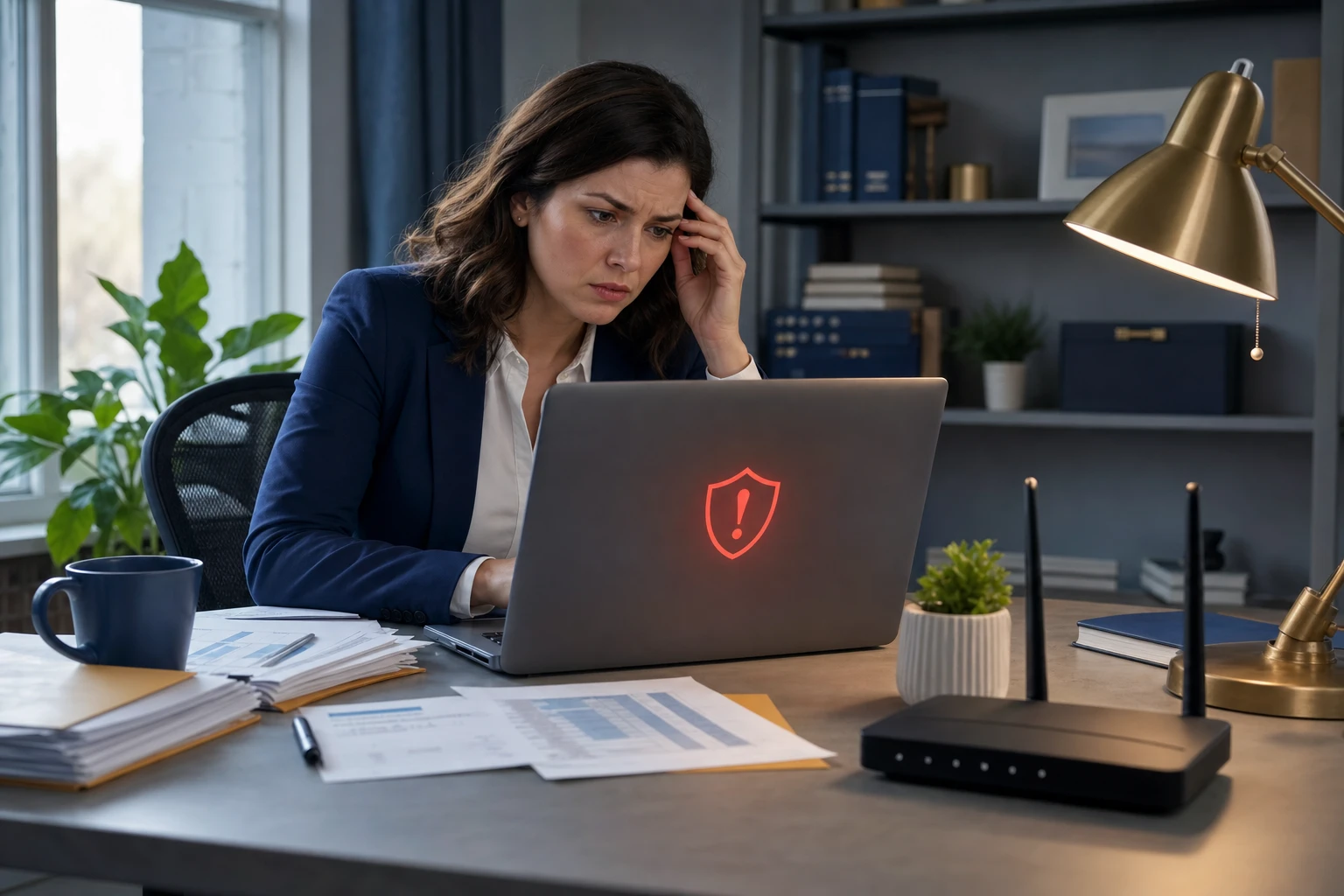
Right now, cybercriminals are crafting their own New Year’s resolutions—not about wellness or balance, but about ways to exploit businesses.
They’re reflecting on what scams delivered in 2025 and plotting how to steal even more in 2026.
Small businesses remain their prime targets—not due to negligence, but because busy schedules create vulnerabilities. According to the Verizon 2024 Data Breach Investigations Report, small businesses account for a disproportionate share of data breaches, with phishing and pretexting driving the majority of social engineering incidents.
Here’s their 2026 approach—and how you can outsmart them.
Cybercriminal Resolution #1: “Create Convincing Phishing Emails That Evade Detection”
Gone are the days of poorly written scam emails.
With AI, attackers craft messages that:
- Sound natural and authentic
- Replicate your company’s style and jargon
- Mention actual vendors you work with
- Eliminate obvious warning signs
It’s not about spelling errors anymore; it’s about sending at the right moment—like hectic January.
Example phishing email:
“Hi [your actual name], I couldn’t send the updated invoice; the file bounced back. Is this still the right accounting email? Here’s the corrected version — please let me know if you have any questions. Thanks, [name of your actual vendor].”
No flashy scams, just familiar and believable requests.
Your defense strategy:
- Train your staff to verify all requests related to money or credentials via separate channels.
- Deploy advanced email filters to detect impersonation, such as mismatched servers and sender details.
- Encourage a culture where verifying communication is commended, not questioned.
Cybercriminal Resolution #2: “Impersonate Your Vendors and Executives”
These attacks are alarmingly convincing.
Fake vendor notices might say: “We updated our bank account; please send payments here.”
Or a “CEO” texts your accountant urgently: “Process this wire immediately; I’m in a meeting.”
Even more alarming, deepfake voices mimic executives, making fraudulent calls that seem authentic.
This is not fiction—it’s happening now. The FBI’s Internet Crime Complaint Center (IC3) reports that business email compromise schemes have caused over $50 billion in losses globally since 2013.
How to counteract:
- Implement mandatory callback policies for bank detail changes using verified phone numbers.
- Require voice confirmation through trusted channels before authorizing payments.
- Enable multi-factor authentication for all administrative and financial accounts.
Cybercriminal Resolution #3: “Increase Focus on Small Businesses”
Large companies have strengthened security, making them harder to penetrate.
Cybercriminals now prefer multiple smaller attacks on small businesses to achieve steady profits.
They exploit common weaknesses: understaffed teams, lack of security specialists, overwhelming workloads, and the false belief of being too small to be targeted.
Protect your business by:
- Implementing fundamental protections like MFA, timely updates, and dependable backups to deter attackers.
- Rejecting the myth that small size means immunity; it only means lower visibility after attacks.
- Partnering with cybersecurity professionals to continuously safeguard your operations.
Cybercriminal Resolution #4: “Exploit New Employees and Tax Season Confusion”
January brings new hires eager to help but unfamiliar with company protocols—perfect targets.
Fraudsters impersonate executives requesting urgent payroll data like W-2s, leading to identity theft and fraudulent tax filings against your employees.
Prevent damage by:
- Providing security training during onboarding before granting email access.
- Establishing clear policies: no W-2s emailed, and all payment requests verified by phone.
- Recognizing and rewarding employees who diligently confirm suspicious requests.
Prevention Outperforms Recovery Every Time
With cybersecurity, you have two paths:
Option A: React after a breach—pay ransoms, hire emergency teams, notify clients, rebuild your systems. Costs skyrocket, disruption lasts months, and the memory remains.
Option B: Proactively secure your infrastructure, educate your staff, monitor threats relentlessly, and close gaps early. Costs are modest, and operations continue uninterrupted.
Like owning a fire extinguisher—you keep it ready so you never have to use it.
How to Make 2026 a Cyber Safe Year
A dedicated IT partner can protect your business by:
- Providing 24/7 threat monitoring to stop breaches before they occur.
- Securing access credentials to limit damage from stolen passwords.
- Educating your team on advanced scams, not just the obvious ones.
- Implementing strict wire fraud verification policies.
- Maintaining and regularly testing backups to minimize ransomware impact.
- Promptly patching systems to close loopholes.
Focus on prevention, not crisis management.
Criminals have their 2026 plans in place, expecting businesses like yours to be ripe for attack. Let’s change their expectations.
Remove Your Business From Their Target List Today
Schedule a New Year Security Reality Check with us.
We’ll identify your vulnerabilities, prioritize fixes, and help you stop being easy prey in 2026.
No gimmicks or jargon—just clear insights and practical steps.
Click here or give us a call at 408-335-0353 to schedule your Discovery Call.
Because the best resolution is ensuring your business is never a cybercriminal’s next goal.
Frequently Asked Questions
What are the common tactics used by cybercriminals in 2026?
In 2026, cybercriminals are using more sophisticated tactics, including creating convincing phishing emails that closely mimic legitimate communications. They also impersonate vendors and executives, utilizing deepfake technology to make their fraudulent calls seem authentic. It’s crucial for businesses to stay vigilant and recognize these threats.
How can small businesses protect themselves from cyber attacks?
Small businesses can strengthen their defenses by implementing basic cybersecurity measures like multi-factor authentication (MFA), regular software updates, and reliable data backups. Additionally, fostering a culture of verification among employees and training them to recognize suspicious requests can significantly reduce vulnerability.
What should I do if I receive a suspicious email from a vendor?
If you receive an email that seems suspicious, do not respond directly or follow any links. Instead, verify the request through a separate communication channel, such as a phone call to the vendor using a known number. This extra step can help prevent falling victim to a phishing attempt.
How can partnering with a managed IT service help with cybersecurity?
Partnering with a managed IT service can provide your business with expert knowledge and resources to implement robust cybersecurity measures. Companies like One82 specialize in protecting CPA firms, law firms, and financial services from evolving cyber threats, ensuring you have the necessary defenses in place to safeguard your operations.