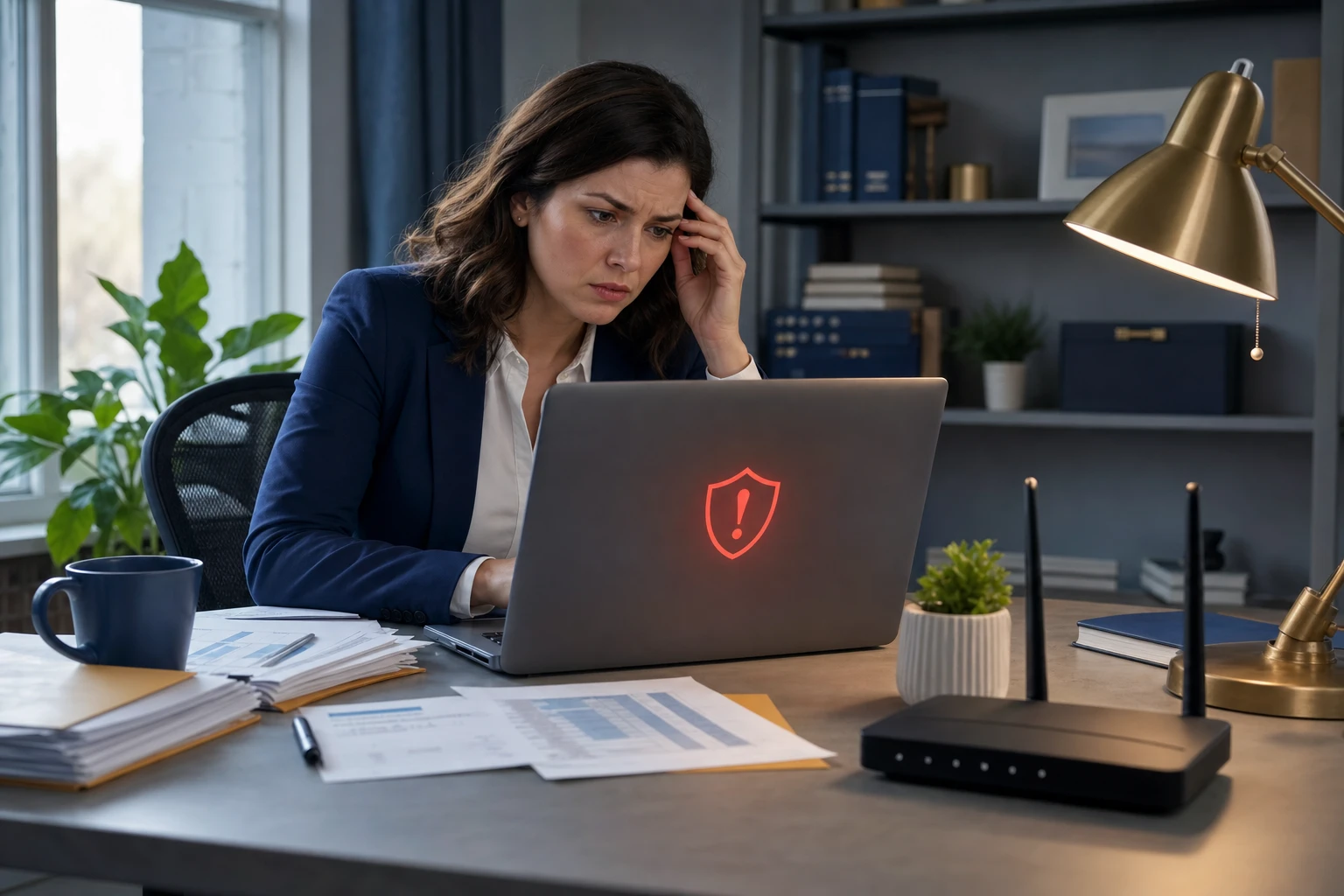
Imagine you and your team arrive at work, ready to take on the day’s challenges, only to find that the Internet is down. Emails are non-functional, and productivity comes to a standstill. What would you do? For many businesses, when the Internet fails, operations are severely disrupted, leading to significant losses in productivity and revenue. The IBM Cost of a Data Breach Report found that the average cost of a data breach reached $4.88 million in 2024, with system downtime being a major contributing factor. Consider the MGM data breach from this past summer: electronic room keys were inoperable, casinos had to shut down, and online restaurant reservations were unavailable. This downtime cost MGM millions.
However, downtime is just one way inadequate IT support can hinder your business. Add in ongoing frustrations such as forgotten passwords, malware issues, or difficulties accessing shared files, and the list of inefficiencies can quickly become overwhelming.
Too often, business owners find themselves paying hefty fees for IT support that struggles to address even the simplest issues. These so-called “IT experts,” who claim to offer top-notch service at low prices, frequently spend more time idly waiting than actively resolving problems, relying on you to inform them when something is wrong.
You shouldn’t have to endure tech troubles and reactive IT support that only responds after problems arise. It’s time to expect more and eliminate tech issues before they occur.
To assist you, we’ve put together a checklist of essential standards that any IT provider managing your network should meet. Evaluate how your current provider stacks up:
- Do they answer their phone live and respond to emergencies within a specified time frame?
In a crisis, being put on hold or leaving voicemails isn’t acceptable.
- Are they accessible and responsive for non-emergencies, providing replies within an hour?
Routine tech problems shouldn’t leave your team in a bind.
- Do they actively monitor, patch, and update your network’s critical security settings?
If you’re unsure about the frequency of these updates, your security may be at risk.
- Do they provide evidence that all your data, including that from laptops and devices, is being backed up?
A reliable IT provider ensures that nothing is overlooked.
- Do they meet with you at least quarterly to discuss projects, performance, and improvements?
Effective IT support goes beyond fixing issues; it also aids in future planning.
- Are their invoices transparent and clearly outline what you’re being charged for?
No one appreciates unexpected charges, especially regarding billing.
- Do they communicate in straightforward language rather than technical jargon and take the time to address your questions?
You shouldn’t need a translator to understand your IT provider.
- Do they proactively address cybersecurity, suggest solutions, and offer employee training?
Cybersecurity is essential, and educating employees is a vital defense strategy. NIST’s Cybersecurity Framework emphasizes that awareness training is a foundational element of any effective security program.
- Have they supplied you with complete network documentation, including administrative passwords?
If they’re withholding critical information, it’s a significant warning sign.
- Do their technicians arrive punctually, dress professionally, and leave you feeling assured after each interaction?
Professionalism is key—if you feel uneasy every time you call, it may be time to find a new provider.
Bonus Points: Is Your IT Provider Exceeding Expectations?
- Do they perform regular disaster recovery drills to ensure your backups function correctly?
A backup is ineffective if it fails when you need it most.
- Are they assisting you in planning for scalable growth with technology that adapts alongside your business?
The right IT partner ensures your systems evolve with your company.
- Do they provide advanced cybersecurity tools, such as endpoint detection and AI-driven monitoring?
As cyber threats continue to evolve, your protection should advance as well.
- Do they monitor and optimize your network’s performance to avoid bottlenecks and downtime?
Efficiency is crucial in today’s competitive environment.
Time to Elevate Your Standards
If your current IT provider doesn’t meet all these criteria, you may be paying for inadequate service, which could jeopardize your business. From security risks to lost productivity, poor IT support is more than a minor inconvenience—it’s a potential liability.
Don’t settle for anything less than a partner who prioritizes your business’s success.
Schedule a free Discovery Call today to see how we can eliminate your tech headaches and ensure your
business runs smoothly. **[Click
here](/discoverycall) to schedule now** or call us at 408-335-0353 to get started.
Let’s make tech problems a thing of
the past.
Frequently Asked Questions
How can I tell if my IT provider is effective?
An effective IT provider should be responsive and accessible, answering calls live and addressing emergencies promptly. They should also provide regular updates on network security, conduct quarterly meetings to discuss performance, and be transparent about their billing practices.
What are the signs that my business is experiencing tech inefficiencies?
Common signs of tech inefficiencies include frequent downtime, slow response to IT issues, and a lack of proactive support. If your team is repeatedly facing issues like forgotten passwords or malware, it may indicate that your current IT support isn’t adequately addressing your needs.
Why is proactive IT support important for my business?
Proactive IT support helps prevent issues before they disrupt operations, saving your business time and money. By actively monitoring systems and addressing vulnerabilities, a good IT provider can enhance productivity and reduce the risk of costly downtime.
How can One82 help my firm with IT support and cybersecurity?
One82 specializes in managed IT services and cybersecurity for CPA firms, law firms, and financial services firms, focusing on proactive support and comprehensive solutions. They can help ensure your technology runs smoothly, data is secure, and your staff is trained to recognize and prevent cybersecurity threats.